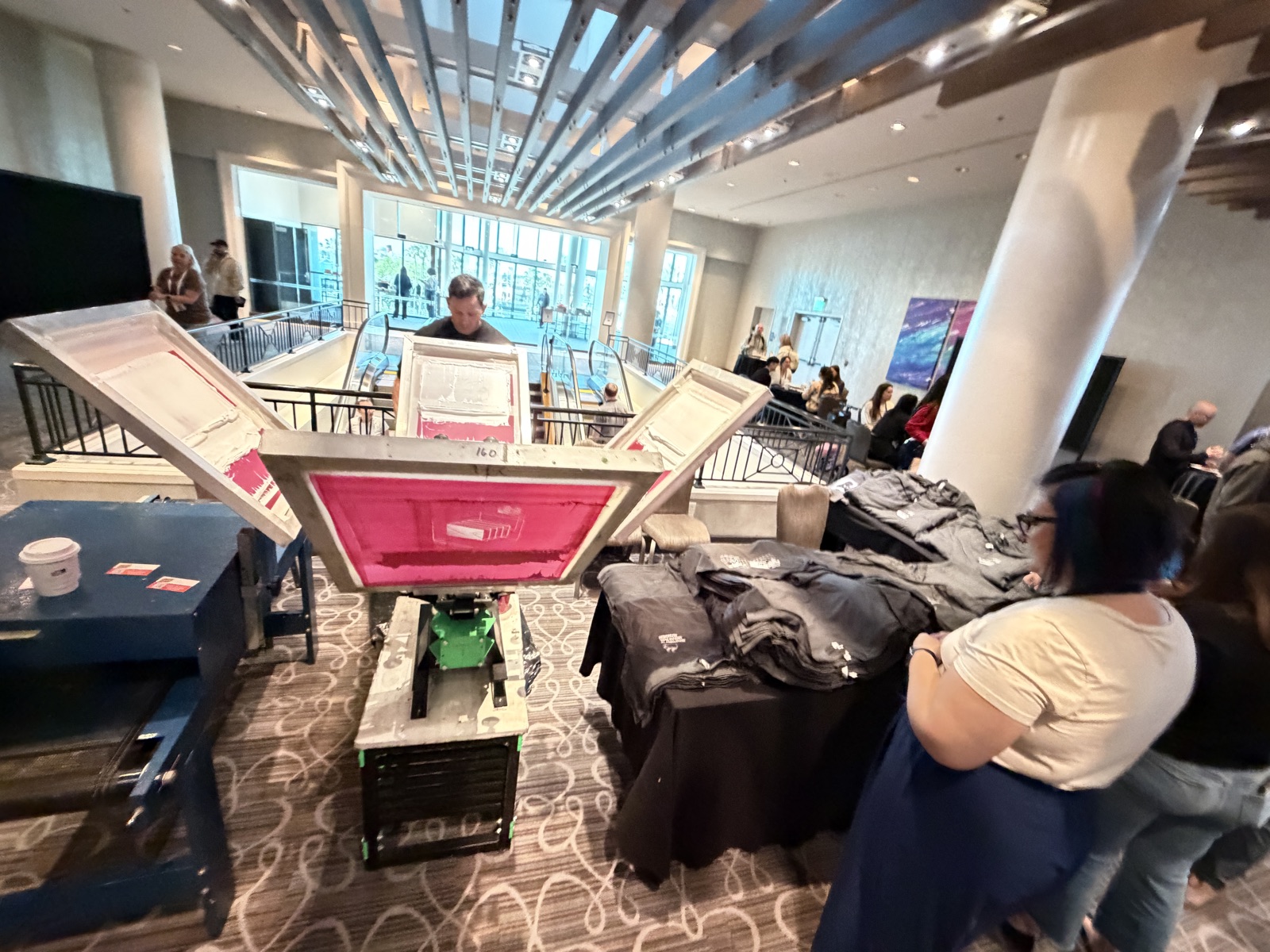
Event screen printing services turn a routine giveaway into the part of your activation people stop to watch. Instead of handing out pre-printed shirts from a box, a staffed press runs in the booth — pulling squeegees, flashing ink, and handing finished merch to guests while the line keeps moving. Done well, it reads like a small print shop dropped into your floor plan. Done badly, it stalls into a bottleneck with a dry rack nobody can reach. The difference is almost never the machine; it is the plan. This guide walks through how the live process actually runs, the art and substrate decisions that make or break throughput, realistic turnaround on the floor, the crew you need, and the pricing factors that shape a real quote.
How the live press runs on the floor
A live screen-print station is a compressed version of a production shop. Screens are burned with your artwork before the truck ever loads, ink is mixed and logged, and blanks arrive sorted by size so the operator never has to hunt. On show day the press is set, registered, and test-pulled before doors open. From there the rhythm is simple and repeatable: a guest picks a design and a size, the operator loads the garment on the platen, prints, flashes or cures, and the piece moves to a dry rack or heat press for a final set. A runner pulls finished merch and hands it back, usually folded.
The reason this matters for planning is that every one of those steps is a station, and every station has a pace. The print itself is fast — a single-color pull takes seconds — but curing, staging, and the guest handoff are what set the real throughput. A booth that prints in two seconds but cures in ninety still hands out a shirt every ninety seconds. We design the line around the slowest step, not the fastest, and add parallel stations only where the floor and the crew can support them.
Spot color vs. multi-color: pick the right art for live
Screen printing prints one ink color per screen. That single fact drives most of the art decisions for an event.
Spot-color and one-hit designs
A bold one- or two-color logo is the workhorse of live printing. One screen, one pull, a quick flash, and the piece is essentially done. These designs cure fast, register easily, and keep the line moving at its quickest pace — which is exactly what you want when a crowd is forming.
Multi-color and detailed art
Full-color or photographic artwork needs multiple screens, careful registration between colors, and more curing time per piece. It looks fantastic, but each added color slows the line and raises setup. For most activations we recommend a small menu of strong spot-color designs guests can choose from, and we reserve multi-color runs for hero pieces or lower-volume VIP items where the wait is acceptable.
- Keep the live menu tight — two to four designs beats a dozen.
- Build in personalization smartly — names and event tags as a quick second hit add value without crushing throughput.
- Lock art early — screens are burned in advance, so last-minute art changes are the most expensive change you can make.
Substrates: what we can print at an event
Screen printing is forgiving across flat-ish goods, which is why it suits live merch so well. Common event substrates include:
- T-shirts and tanks — the classic, fastest-moving live item.
- Tote bags — durable, reusable, and a favorite for trade-show traffic.
- Posters and art prints — printed on paper for a gallery-style giveaway.
- Hoodies and crewnecks — higher perceived value; slightly slower to print and cure.
- Bandanas, aprons, and tea towels — fun niche items for the right brand.
Each substrate has its own ink, mesh, and cure profile, so we confirm the blank early and source it to match the look you want. If your program needs caps, curved drinkware, or full-color photo merch, we will often pair the screen station with embroidery, DTF, or UV-DTF so guests still get the right item without forcing it through the wrong method.
Turnaround: how fast is fast on the floor
The honest planning number is per-piece throughput, not the speed of one pull. A clean single-color station with a dialed-in crew can hand a guest a finished shirt in roughly one to two minutes including the wait, queue, and handoff. Add colors, add curing, or add personalization, and that figure stretches. For a busy four-hour activation, planning around a steady, sustainable pace beats sprinting and running out of blanks at hour two.
Pre-production is where most of the speed is won. Burning screens, mixing ink, and pre-sorting garments before load-in means the on-site time is spent printing, not setting up. We also stage extra blanks by popular size so the line never pauses to restock.
Staffing the station
A live booth is a crew operation, not a one-person job. A typical station runs with a press operator who prints and cures, a runner who stages blanks and hands off finished merch, and a host who manages the guest queue and explains the menu. Larger or higher-traffic events add a second press and crew. Getting these roles right is what keeps the experience feeling fast and friendly instead of chaotic — the operator never leaves the press, the runner never lets the rack pile up, and guests always know where to stand.
What moves the price
Event screen printing is quoted as a service, not a per-shirt sticker. The factors that move a quote are predictable:
- Event hours and total on-site time, including setup and teardown.
- Staffing — how many operators and runners the traffic requires.
- Guest count and quantity — how many pieces you expect to produce.
- Product choice — premium blanks and specialty substrates cost more.
- Art complexity — color count drives screen and setup time.
- Travel — local SoCal vs. out-of-region.
- Sourcing — whether Merch Troop supplies the blanks or you do.
Merch Troop is based in Southern California and runs live event screen printing across Orange County, Los Angeles, San Diego, and Las Vegas, with nationwide programs available given enough lead time. Tell us the event, the products, and the deadline, and we will scope a station built for your floor.